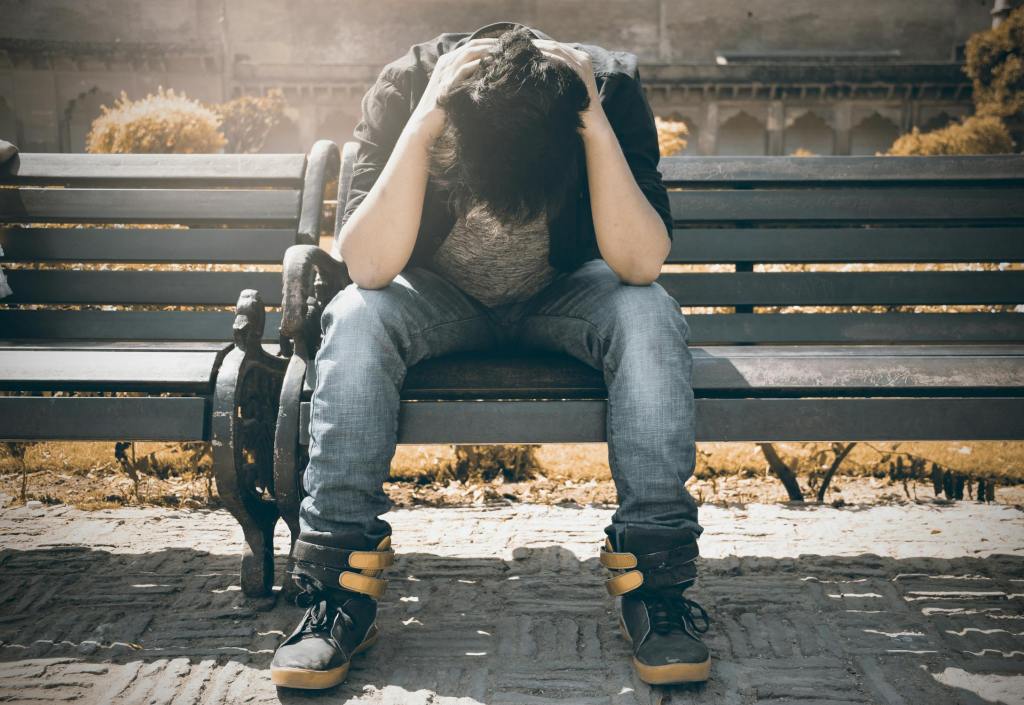
“There is a sacredness in tears. They are not the mark of weakness but of power. They speak more eloquently than ten thousand tongues. They are the messengers of overwhelming grief, of deep contrition, and of unspeakable love.” -Washington Irving
In times of trouble, we do what we can to feel helpful. I am a writer and a teacher, so I decided to write.
Your student has experienced something traumatic. Whether they knew the students involved or not, whether they saw the incident or its aftermath or not, they are going through what no student should ever have to go through.
Beware of social media.
As soon as the incident occurred, pictures and videos circulated on social media. Many of our students live and socialize on platforms like Discord and TikTok, so it’s natural for them to go online to find out what’s going on.
Unfortunately, seeing images and videos of crime scenes can cause damage. Many students want to know; they’re looking for answers or are detached from the situation and see it as a form of entertainment.
Please remind your students that sharing this content and leaving comments is inappropriate. Remind them that the family members of the victim can see their comments and their reactions and that Darrin, the victim, was a student, too, and a human being.
Social media can be remarkable, but it can also be dehumanizing.
Reasons seeing these images can be harmful:
- Emotional distress
Whether they are aware of it or not, seeing violent images changes kids’ brains. It can cause fear, stress, anxiety, and aggression. Scientists have been concerned about violent media since the 1950s. Social media and true crime fads have only deepened society’s craving for disturbing and violent images and media. I’m not judging, I’m a huge horror movie fan myself but the fact remains that our society has an unhealthy obsession with violence.
We see things like decreased self-regulation (an inability to control one’s feelings), an increase in fight or flight reactions, even in average, non-threatening situations, certain regions of the brain can also physically shrink (the same as PTSD), insomnia, and general depression and apathy. - Distorted perception of reality
When kids see it on a screen, it’s not “real.” Some students may use this as a coping mechanism to distance themselves from the event, while others may use it for entertainment because the spectacle doesn’t seem real to them. - Desensitization
Being exposed to violence, violent situations, or even the fear of violence can lead to desensitization or apathy over time. “It’s going to happen no matter what, so why should I care?” - Mental health issues
It probably goes without saying, but viewing, sharing, and commenting on violent images can lead to anxiety, depression, or increasingly aggressive behavior.
Your support and understanding are crucial in helping your child navigate these difficult emotions. Letting them hear that you are worried and concerned about them doesn’t show weakness; it shows that you care and you’re there for them. Sharing your thoughts and feelings could encourage them to do the same.
This article by Mental Health American offers excellent strategies for speaking to your kids about school safety, mental health, and other issues your family may encounter.
It may take a minute.
It’s only been a few days, and while students may be relieved to have some time off, they may not have fully processed what happened. Be prepared for delayed reactions, especially when we return to school next week, and students are confronted with the reality of what happened.
Grief is a process that can take days, weeks, months, or even years to fully develop. Some students may still be in shock due to the sudden and violent nature of the incident. Be prepared for delayed reactions, especially when we return to school next week.
Austin has an excellent resource in The Austin Center for Grief and Loss. I know they occasionally hold workshops at our school, but you can also reach out to them for counseling services. Their website is here.
Be aware of other community resources.
Our school has counselors and case workers to help our students when they can.
For students with last names that start A – G, Ms. Seeds is their counselor (blanca.seeds@manorisd.net).
For students with last names that start with H – O, Ms. Baughman is their counselor (maria.baughman@manorisd.net)
For students whose last names start with P—Z, Ms. Hughes is their counselor (linda.hughes@manorisde.net).
Our on-campus case worker who helps with crisis management and mental health issues is Harley Wardlow (harley.wardlow@manorisd.net). She is not with us daily, but she spends time here reaching out and speaking with students.
Manor ISD also has a page dedicated to local mental health support, which can be found here.
Don’t diminish or downplay it.
As adults, we often want to help our kids move past difficult situations quickly. However, it’s important not to downplay what they’ve been through. Even if they didn’t witness the incident or know the students involved, they still experienced a lockdown and the fear that comes with it.
What your student went through:
The lockdown involved an urgent overhead announcement that we were in lockdown mode and that it was not a drill. Students in open areas like the cafeteria or flex room would have felt extra exposed and scared because they did not initially have a locked door to hide behind. Rest assured that adults were all over the place helping kids get to safer areas.
If your students have B lunch (12:30 – 1pm), they may have even seen some of the incident occur or the aftermath. Many of my students said they saw “a lot of blood.”
Once your students were safely behind a locked door, they may not have been with a teacher they knew, which can also be stressful. I grabbed any kid I could to get them out of the hall and into my room, and I had several kids in my room who were not my students.
Rumors were flying. The images were on social almost instantly, as were false rumors about there being a gun, that there was more than one perpetrator, and that this was “just the beginning.” Students were also finding out in real-time who was involved and that a student had died. Lies and the truth mixed to create an atmosphere of confusion and fear.
Once things calmed down, students remained in classrooms for an extended period, not knowing what was happening next. While many teachers did their best to let students know that they were safe, that the incident was isolated, that buses and parents were on the way, and that we would be leaving as soon as it was safe to do so, students were still understandably anxious and stressed.
For many students, this event was a confirmation of their worst fears. They have lived with the threat of school violence all of their lives, and now it’s happened.
What’s next
Thank all of you for being supportive, and caring presences for your kids, especially at this time.
We are going through training to be better equipped to help welcome your students back to school on Tuesday. Please be sure to take care of yourselves, as well. I can’t imagine the terror and stress you may have felt when you heard something had happened at your child’s school. I am a parent myself, and it’s something I fear every day.
I am a resource for you and your kids. Please know that I will always do my best to keep them safe when they are with me.
Don’t hesitate to contact me with any questions, comments, or concerns.
 Ms. Courtright's Class
Leave a comment